
Your shopping cart is empty!
Native American Flute Keys and How to Choose the Right One
One of the most common questions beginners ask is, “What key should I choose for my first Native American style flute?”
The answer depends on comfort, tone preference, and whether you plan to play with other musicians.
Lower keyed flutes are longer and heavier. The tone holes are spaced farther apart. This makes them somewhat more difficult to hold and play, especially for someone new to the instrument.
For most beginners, keys such as A or G offer the best balance between comfortable finger spacing and a pleasing tone. F# is also a popular key and works well for many players.
If you are just starting, it is usually wise to begin with a comfortable mid range flute such as A, G, or F# rather than the longer and lower toned flutes such as F, E, D, or C.
Comfort should guide your decision.
How Key Affects Flute Size and Length
A Love flute in a higher key will have a shorter barrel length than a flute in a lower key.
For example, a flute in the key of A has a barrel length of approximately twelve and a half inches. A flute in the key of E below middle C has a barrel length of around seventeen and a half inches.
The barrel is the hollow chamber where sound vibrations are generated. A Native American style flute also has a second chamber called the slow air chamber, which adds additional length. For example, an Ancient Territories Native American style flute in the key of A measures about twenty one inches from end to end.
As the key goes lower, the flute becomes longer, heavier, and the finger holes move farther apart.
See flute dimensions.
Key Range of the Native American Flute
Native American style flutes in the keys of A above middle C through E below middle C are often called mid range flutes.
Lower keyed Love flutes are called bass flutes when they are one octave below middle C and double bass flutes when they are two octaves below.
Higher keyed flutes are called treble flutes.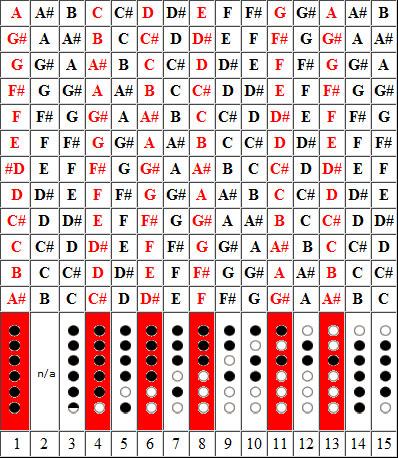
Therefore a novice is advised to start with a comfortable sized flute such as an A, G or F# rather than the longer and lower toned flutes such F, E, D or C.
If you are unsure what key range feels best, listening to sound samples can help you hear the difference between treble, mid range, and bass flutes.
How Different Keys Affect the Sound
Each key has its own tonal character.
A Native American style flute in the key of A plays a Mode One pentatonic scale consisting of the notes A, C, D, E, and G. A flute in the key of G plays a Mode One pentatonic scale consisting of G, A#, C, D, and F.
Because the notes differ from key to key, the overall flavor of the music changes.
Higher keys tend to sound brighter and more energetic. Lower keys tend to sound deeper, more relaxed, and more meditative.
For example, the Penny Whistle used in Irish dance music is often played in high D. Its sound is penetrating and energetic. In contrast, a Native American style flute in F, E, Eb, or D produces a softer and more meditative tone.
Many people are naturally drawn to lower keyed flutes for their depth and warmth.
Color and the Tone of the Verious Keys Of The Native American Flute
Some flute players experience each note as having a corresponding color. Or the different notes can be compared to different flavors of sound. Just as there are different flavors of ice cream there are different flavors of sound.
The note G has a different tonal flavor than the note A. Higher sounding notes that vibrate at more rapid rates have/convey more energy. They are more stimulating.
Lower notes are more relaxed and meditative. Perhaps you are familiar with the sound of the Penny Whistle used in much Irish dance music. The Penny Whistle is usually in the key of what is commonly called high D. High D is the second D above middle C on the piano. This instrument has a very penetrating and stimulating sound. The dance steps of Irish clog dancing reflect this intensity. They are rapid and energetic. The dancers whirl and stomp. Contrast this to the music of a waltz in the key E.
The sound of a Native American flute in the key of F, E, Eb or D is more meditative in quality. Most of the prospective buyers who sample the sounds on my website are attracted to these lower keyed flutes.
Energy Centers and the key of the Native American Flute
The keys of different Native American style flutes are often assigned to different areas of the human body and their associated energy centers. These energy centers are called Chakras. There are seven charkas. The lowest is at the base of the spine and the highest is at the crown of the head.
According to this tradition:
D corresponds with the base of the spine
E with the lower abdominal region
F with the solar plexus
F# with the heart
G with the throat
G# with the forehead
A with the crown
It is believed that each center vibrates in harmony with its musical note.
Whether or not you follow this tradition, many players do feel naturally drawn to certain keys more than others.
Why Is F# So Popular?
The key of F# is sometimes called the de facto key of the Native American style flute.
Much recorded Native American flute music has been played in F#, and it remains a popular key among amateur players. There may be no single reason for this popularity. It may simply be that the tone of F# resonates strongly with many listeners.
However, F# is not one of the most common keys in Western music. If you plan to play with guitarists or pianists, keys such as A, G, or E may offer easier compatibility.
Flute Key Compatibility
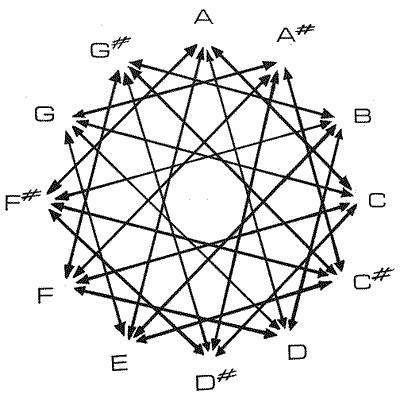
Different flute keys can be played together harmoniously.
A compatibility chart shows which flute keys sound good when played with one another. For example, a flute in A blends well with flutes in F#, E, D, and C.
If you plan to play in a flute circle or with other musicians, it is helpful to consider key compatibility before purchasing.
Just follow the lines from one key to the keys at the other end of the line. For example, take A at the top of the diagram. It is connected to F#, E, D and C. These are the flutes the A flute will sound good with.
How to Decide Which Flute Key Is Right for You
The best way to choose a Native American flute key is to listen.
If possible, listen to sound samples or play flutes in different keys. Pay attention to how the flute feels in your hands and how the tone affects you.
Often, you will simply know when you hear the sound that feels right.
Frequently Asked Questions About Native American Flute Keys
What is the best key for a beginner?
Most beginners start with A or G because the finger spacing is comfortable and the tone is balanced. F# is also popular, but the hole spacing may feel slightly wider for some players.
Are lower keys harder to play?
Yes. Lower keys mean longer flutes and wider spacing between finger holes. This can make them more challenging for beginners.
Do different keys really sound different?
Yes. Higher keys sound brighter and more energetic. Lower keys sound deeper and more meditative. Each key has its own character.
Can I play with other musicians?
Yes, but compatibility matters. Keys such as A, G, and E tend to work well with guitar and piano. Always consider compatibility if you plan to play in a group. If you plan to play with other instruments, you will want a Native American style flute tuned to 440 Hz. For more information, see our page on Tuning for the Native American Style Flute, 440 Hz vs 432 Hz.
Native American Love Flutes, Tuning, Breathing, chromatic scale, pentatonic scale, sound, flute, instrument, notes