Native American Style Flute Facts and Dimensions
We understand that many people want detailed information before choosing a flute. Unless you visit our shop, you cannot hold the instrument, feel its weight, or examine its proportions from every angle.
Here we provide representative dimensions and construction details for Ancient Territories Native American style flutes. Dimensions may vary slightly from one instrument to another due to the nature of handcrafting.
Relative Weights of Hardwood Species
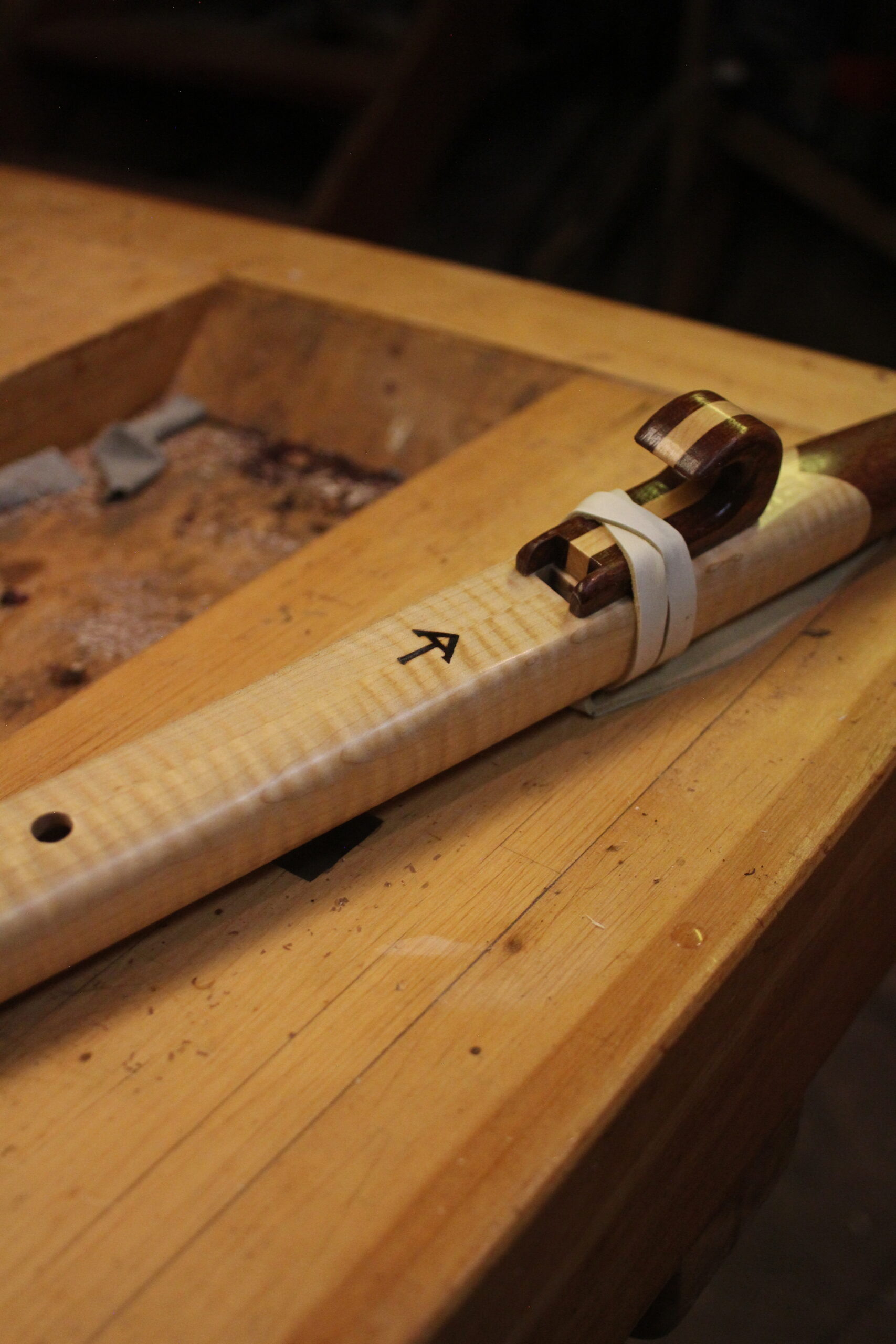
To give a sense of relative density, the following weights were measured from an F sharp backpacker flute made from different hardwoods.
-
Zebrawood — 9.7 oz (275 g)
-
Walnut — 7.45 oz (211 g)
-
Purpleheart — 8.85 oz (252 g)
-
Bubinga — 10.7 oz (305 g)
Because we use hardwood species, our flutes are heavier than instruments made from softwoods such as cedar or redwood.
For more on how density influences tone, see our Wood Density and Tonal Quality article.
Standard Blow Hole Diameter
All of our flutes use a 3/8 inch diameter blow hole leading into the Slow Air Chamber.
Love Flute Dimensions by Key
All measurements are taken from the mouth end of the flute downward.
Splitting edge distance is measured from the mouth end.
Tone hole distances are measured to the center of each hole.
Flute in the Key of C
-
Overall length — 18 1/8 inches
-
Bore diameter — 3/4 inch
-
Distance to splitting edge — 7 1/2 inches
-
Hole 6 — 10 11/16 inches
-
Hole 5 — 11 7/16 inches
-
Hole 4 — 12 1/8 inches
-
Hole 3 — 13 1/16 inches
-
Hole 2 — 14 inches
-
Hole 1 — 14 15/16 inches
Flute in the Key of B
-
Overall length — 19 1/8 inches
-
Bore diameter — 3/4 inch
-
Distance to splitting edge — 7 1/2 inches
-
Hole 6 — 10 15/16 inches
-
Hole 5 — 11 3/4 inches
-
Hole 4 — 12 1/2 inches
-
Hole 3 — 13 5/16 inches
-
Hole 2 — 14 3/8 inches
-
Hole 1 — 15 7/16 inches
Flute in the Key of A
-
Overall length — 21 1/4 inches
-
Bore diameter — 7/8 inch
-
Distance to splitting edge — 8 3/8 inches
-
Hole 6 — 12 1/16 inches
-
Hole 5 — 12 15/16 inches
-
Hole 4 — 13 7/8 inches
-
Hole 3 — 14 13/16 inches
-
Hole 2 — 16 1/16 inches
-
Hole 1 — 17 1/8 inches
Flute in the Key of G
-
Overall length — 23 inches
-
Bore diameter — 7/8 inch
-
Distance to splitting edge — 8 3/8 inches
-
Hole 6 — 12 7/8 inches
-
Hole 5 — 13 13/16 inches
-
Hole 4 — 14 13/16 inches
-
Hole 3 — 15 13/16 inches
-
Hole 2 — 17 1/16 inches
-
Hole 1 — 18 5/16 inches
Flute in the Key of F Sharp
-
Overall length — 24 inches
-
Bore diameter — 7/8 inch
-
Distance to splitting edge — 8 3/8 inches
-
Hole 6 — 13 3/8 inches
-
Hole 5 — 14 5/16 inches
-
Hole 4 — 15 1/2 inches
-
Hole 3 — 16 3/4 inches
-
Hole 2 — 18 inches
-
Hole 1 — 19 1/4 inches
Flute in the Key of F
-
Overall length — 25 inches
-
Bore diameter — 1 inch
-
Distance to splitting edge — 8 3/8 inches
-
Hole 6 — 13 7/16 inches
-
Hole 5 — 14 9/16 inches
-
Hole 4 — 15 5/8 inches
-
Hole 3 — 17 inches
-
Hole 2 — 18 3/8 inches
-
Hole 1 — 19 11/16 inches
Flute in the Key of E
-
Overall length — 26 inches
-
Bore diameter — 1 inch
-
Distance to splitting edge — 8 3/8 inches
-
Hole 6 — 13 7/8 inches
-
Hole 5 — 14 7/8 inches
-
Hole 4 — 16 1/8 inches
-
Hole 3 — 17 1/2 inches
-
Hole 2 — 18 7/8 inches
-
Hole 1 — 20 3/8 inches
Flute in the Key of Eb
-
Overall length — 27 1/4 inches
-
Bore diameter — 1 inch
-
Distance to splitting edge — 8 3/8 inches
-
Hole 6 — 14 inches
-
Hole 5 — 15 5/8 inches
-
Hole 4 — 16 7/8 inches
-
Hole 3 — 18 3/8 inches
-
Hole 2 — 19 7/8 inches
-
Hole 1 — 21 3/8 inches
Flute in the Key of D
-
Overall length — 28 inches
-
Bore diameter — 1 1/8 inch
-
Distance to splitting edge — 8 1/2 inches
-
Hole 6 — 14 1/4 inches
-
Hole 5 — 15 3/8 inches
-
Hole 4 — 16 3/4 inches
-
Hole 3 — 18 3/8 inches
-
Hole 2 — 20 1/8 inches
-
Hole 1 — 21 3/8 inches
Low Flute in the Key of C
-
Overall length — 30 3/8 inches
-
Bore diameter — 1 1/4 inch
-
Distance to splitting edge — 8 1/4 inches
-
Hole 6 — 14 5/16 inches
-
Hole 5 — 15 5/8 inches
-
Hole 4 — 17 1/16 inches
-
Hole 3 — 19 3/16 inches
-
Hole 2 — 21 3/16 inches
-
Hole 1 — 22 5/8 inches
Cross Section and Structural Design
External Cross Section
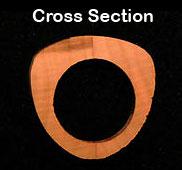
Our flutes feature a distinctive triangular profile with a flattened top surface.
Bore sizes correspond to key:
-
3/4 inch bore for keys B and C
-
7/8 inch bore for keys F sharp, G, and A
-
1 inch bore for keys F, E, and Eb
-
1 1/8 to 1 1/4 inch bore for lower keys
Internal Structure
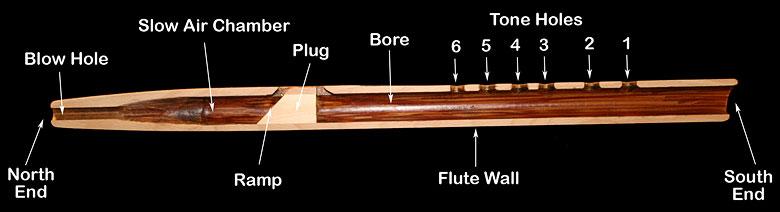
When viewed lengthwise, the internal design reveals the functional components that create tone.
Blow Hole and Slow Air Chamber
A 3/8 inch blow hole leads into the Slow Air Chamber. The SAC is sealed with epoxy to resist moisture absorption.
SAC Plug
A hardwood birch dowel plug separates the SAC from the bore. It is sealed to prevent expansion from moisture, which could lead to cracking.
 Ramp
Ramp
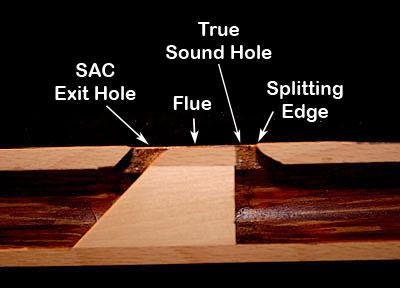
The ramp directs air smoothly from the SAC into the flue. Smooth transition reduces turbulence and improves tonal clarity.
Flue
The flue is cut into the body of the flute. It directs air precisely toward the splitting edge.
Splitting Edge
The splitting edge is positioned at the center of the air stream for optimal clarity and volume.
True Sound Hole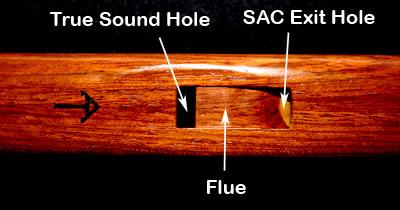
The True Sound Hole is the primary sound generating mechanism. Its dimensions are critical. All surfaces must be clean and smooth.
Bore
The bore is sealed with polyurethane and sanded smooth. A sealed, smooth bore contributes significantly to tonal quality.
For more about how these dimensions affect tone, see our Factors Affecting Tonal Quality article.
Chimney Design
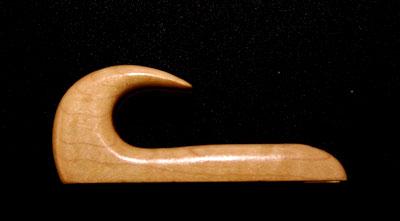
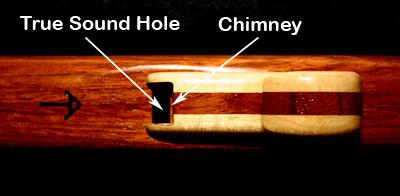 The bird includes forward extensions forming a chimney around the True Sound Hole.
The chimney:
-
Focuses the air stream
-
Protects against cross currents
-
Enhances tonal richness
Ancient Territories Native American Style Flute Sound Wave Bird