
Your shopping cart is empty!
Wood Density and Tonal Quality in Native American Style Flutes
 Wood Density and Tonal Quality in the Native American Style Flute
Wood density plays a meaningful role in shaping tonal character, but it must be understood in proper context.
In Native American style flutes, tone does not come from vibrating wood in the same way it does in a guitar or violin. The sound of the flute comes primarily from a vibrating air column inside the bore. The wooden body acts as a resonance chamber.
Because the body functions as a resonance chamber, wood density influences how sound vibrations are preserved or absorbed.
How a Flute Produces Sound
When a note is played, air inside the flute begins vibrating. This vibrating air column pushes pulsating air out through the true sound hole and the open tone holes.
These pulses of air reach the ear and create the sensation of sound.
The flute body does vibrate slightly. That vibration can be felt with the fingers. However, it is not the primary source of sound production.
Instead, the body shapes tone by how it interacts with the vibrating air column.
See our Factors Affecting Tonal Quality article for more information on sound creation.
Understanding Overtones
There is no pure sine wave tone in nature.
If a flute is playing A at 440 Hz, that fundamental pitch is accompanied by additional frequencies both above and below it. These additional frequencies are called overtones.
Overtones add color, brightness, warmth, and complexity to the sound.
Higher overtones are often perceived as bright. Lower overtones contribute depth and warmth.
Wood density influences how these overtones are treated inside the resonance chamber.
The Janka Hardness Scale
Wood density is commonly measured using the Janka Hardness Scale.
For example:
-
Alaska cedar measures around 580
-
Black walnut measures around 1010
-
Indian rosewood measures around 3170
-
Ipe measures around 3680
Lower density woods tend to absorb certain higher frequency vibrations more readily.
Higher density woods tend to reflect those vibrations rather than absorb them.
When overtones are absorbed by the wood, they are not projected outward into the surrounding air. When they are reflected, they remain part of the projected sound.
Density and Tonal Balance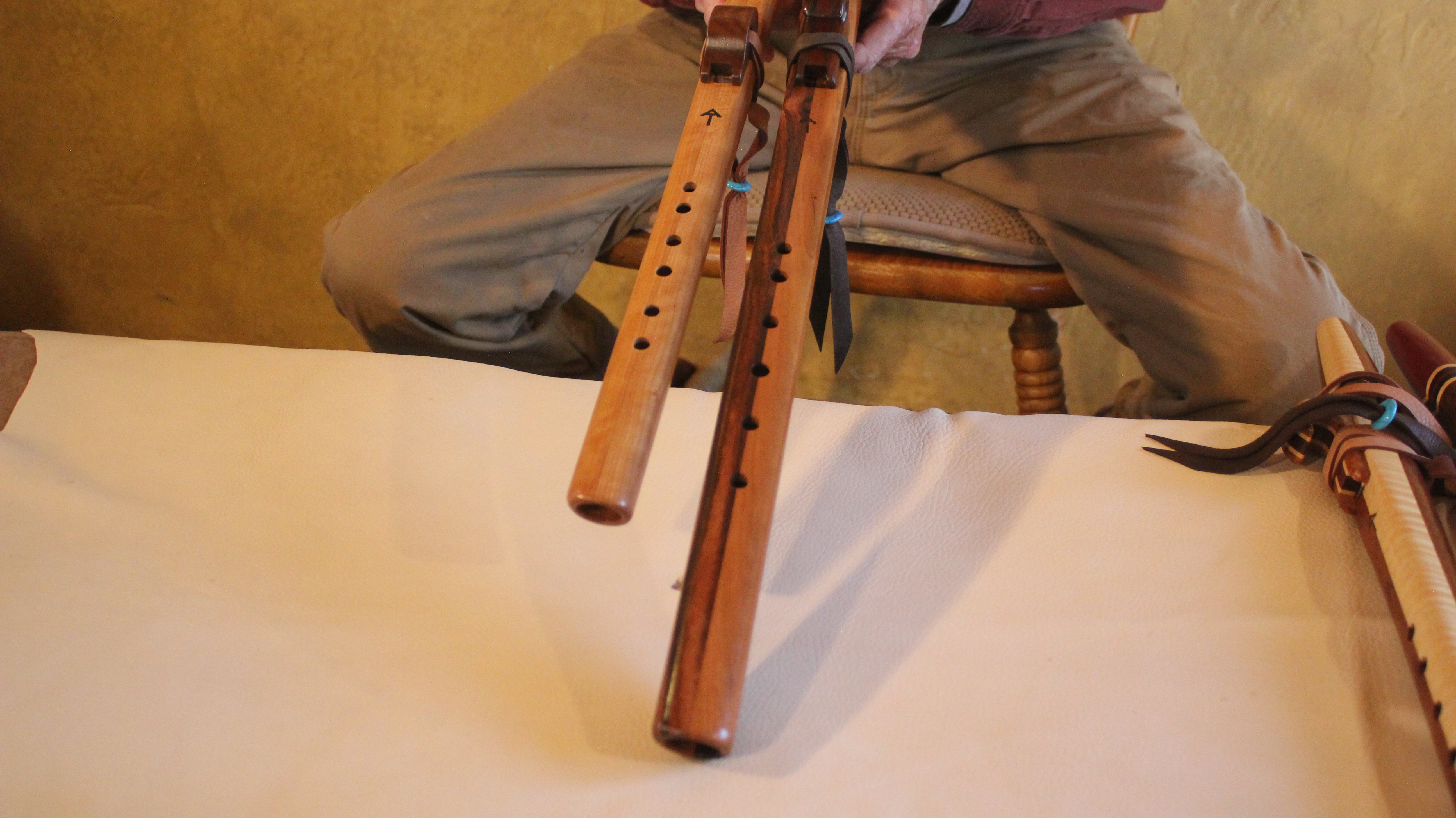
If we seek maximum tonal fidelity, we want a resonance chamber that absorbs as little overtone content as possible. A denser hardwood generally accomplishes this.
However, tonal balance matters more than raw projection.
Higher keyed flutes naturally lean toward brightness. In those cases, slightly softer hardwoods may help soften extreme high overtones.
Lower keyed flutes naturally lean toward warmth and depth. In those cases, denser hardwoods can help preserve brightness and clarity.
For this reason, we consider the key of the flute when selecting hardwood so that the natural voice of the instrument remains balanced and pleasing to the ear.
Density is a tool for balance.
Practical Application in Flute Making
When selecting wood for a specific key, we consider:
-
Natural brightness of the key
-
Desired tonal warmth
-
Projection and clarity
-
Structural durability
For lower flutes, preserving upper overtones helps prevent the tone from becoming overly dull.
For higher flutes, moderating upper overtones can prevent harshness.
These are guiding principles rather than rigid rules. Every handmade flute behaves slightly differently. Bore dimensions, wall thickness, and true sound hole design all interact with density at the same time.
Wood density is one factor among many.
Frequently Asked Questions About Wood Density
Does denser wood make a louder flute
Denser wood tends to reflect more overtones, which can increase clarity and projection. However, loudness is also strongly influenced by bore design and breath control.
Why do softer woods sound mellow
Softer woods tend to absorb higher overtones more readily. This selective absorption reduces brightness and produces a warmer tonal character.
Is higher Janka hardness always better
Not necessarily. Higher density preserves more overtones, but too much brightness can sound hard or dry. Balance is the goal.
Does wood density affect tuning
Density influences resonance and overtone behavior, but tuning stability depends more directly on design precision, temperature, and breath pressure.